Choosing the right bird perch is an important part of creating a comfortable and enriching environment for pet birds. A perch is more than just a place to sit. Birds spend much of their time standing, resting, climbing, and moving between perches inside their cages.
Two common options are natural wood bird perches and plastic perches. While both can provide a place for birds to stand, they offer different textures, comfort levels, and enrichment opportunities. So, which one is better for your feathered friends?
1. Natural Wood Bird Perches Offer a More Natural Experience
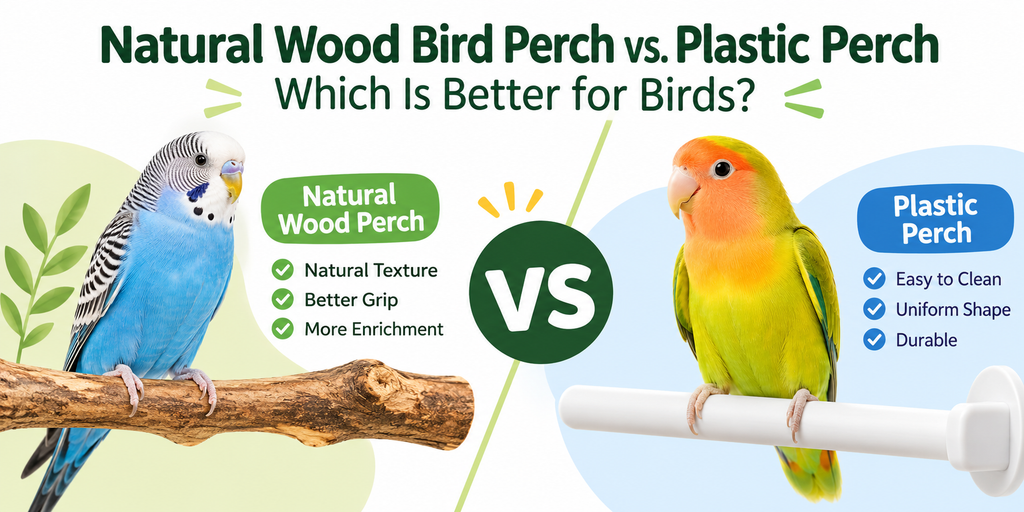
In the wild, birds naturally land and perch on branches of different shapes, sizes, and textures. A natural wood bird perch can help bring some of this familiar environment into a home bird cage.
Unlike uniform plastic rods, natural wooden perches often have irregular surfaces and varied diameters. These variations encourage birds to adjust their foot positions while gripping the perch.
Natural wood also provides a more familiar texture for many bird species, including budgies, cockatiels, lovebirds, and parrots.
For bird owners who want to create a more natural cage environment, wooden perches are a popular choice.
2. Plastic Bird Perches Have a Different Design
Plastic bird perches are commonly found in standard bird cages. They are usually manufactured with smooth surfaces and consistent shapes, making them easy to produce and install.
One advantage of plastic perches is that their non-porous surfaces are generally easy to wipe and clean. They are also available in different colors and designs.
However, plastic perches usually have a uniform diameter and smooth texture. When used as the only type of perch, they may provide less variety for a bird’s feet and daily activities.
Plastic perches can still serve a purpose, but providing different perch textures and sizes is important for a more enriching cage setup.
3. Natural Wood vs. Plastic Perch: Key Differences
Here is a quick comparison to help bird owners understand the differences.
| Feature | Natural Wood Perch | Plastic Perch |
|---|---|---|
| Texture | Natural, varied texture | Usually smooth |
| Shape | Often irregular | Usually uniform |
| Grip | Offers varied gripping surfaces | Depends on surface design |
| Appearance | Natural wood look | Various colors and styles |
| Cleaning | Requires careful cleaning and drying | Generally easy to wipe |
| Enrichment | Adds natural texture and variety | More limited texture variety |
Both types can be used in bird cages, but natural wooden perches provide additional texture and variation that many pet birds benefit from.
4. Why Perch Diameter and Texture Matter
The diameter of a bird perch is just as important as its material. A perch that is too narrow or too wide may make gripping uncomfortable.
Ideally, a bird’s feet should wrap comfortably around the perch without the toes completely overlapping or remaining too stretched.
Offering several perches with different diameters can encourage natural foot movement and help prevent constant pressure on the same areas of the feet.
Natural branch-style perches are especially useful because their varying shapes provide different gripping positions.
When choosing a perch, always consider your bird’s species, body size, and individual needs.
5. How to Choose a Safe Natural Wood Bird Perch
Not all wood is suitable for birds. When purchasing a natural wood bird perch, safety should always come first.
Here are several important factors to consider:
- Bird-safe wood: Choose wood species known to be safe for the intended bird species. Avoid toxic or unidentified wood.
- Untreated surfaces: Select perches without harmful paints, chemical coatings, or pesticides.
- Smooth installation points: Check that mounting hardware and attachment areas do not have sharp edges.
- Appropriate sizing: Choose a diameter that allows your bird to grip comfortably.
- Easy maintenance: Clean the perch regularly and allow it to dry completely before placing it back in the cage.
Regularly inspect wooden perches for cracks, splinters, excessive wear, or contamination, and replace them when necessary.
6. Which Bird Perch Should You Choose?
For most pet birds, natural wood perches are an excellent option for adding texture, variety, and a more natural feel to their cages.
Plastic perches may be convenient for cleaning and basic cage setups, but they should not necessarily be the only type of perch available.
A good approach is to provide several appropriately sized perches made from bird-safe materials, with different shapes and textures. This helps create a more interesting and comfortable environment for your feathered companion.
If you are looking for a practical way to improve your bird’s cage setup, consider adding a natural wooden bird perch alongside other suitable bird cage accessories.
Looking for Natural Wooden Bird Perches?
We supply bird supplies and natural wooden bird perches for pet product wholesalers, retailers, and brands. Contact us to learn more about our product range, wholesale options, and OEM/ODM customization services.